Wholesale Knitted & Woven Fabric Manufacturer in Turkey
DRU Textile is a knitted and woven fabric manufacturer based in Denizli, Turkey, supplying garment and home-textile manufacturers, brands, wholesalers and fabric buyers. We produce plain-dyed and printed fabrics in cotton, organic cotton, modal, bamboo and blends, with GSM, width and construction agreed for each project. Fabrics are supplied in rolls, and every order follows a controlled process from yarn sourcing and sampling through to quality control, packing and export.
Custom Fabric Production and Wholesale Roll Supply
Knitted and woven fabric production is our core activity in Denizli. Through Custom Fabric Development, we work from your brief to define the fabric type, composition, GSM, width and colour or print, then produce a sample for your approval before bulk production starts. This suits brands and manufacturers who need a fabric built around a specific product rather than chosen from a fixed range.
Our Wholesale Roll Fabric Supply serves garment makers, home-textile producers and wholesalers who buy fabric by the roll. Plain-dyed and printed fabrics are produced to the agreed specification, checked, labelled and packed in rolls ready for cutting or onward sale. Both services draw on more than 60 years of experience in textile production and over 10 years of export work, with every stage managed in a controlled and transparent way.
Our Fabric Production
We produce knitted and woven fabrics to order, plain-dyed or printed, and supply them in rolls. The overview below summarises our fabric production; full specifications are agreed with each enquiry.
Our knitted range covers the everyday structures used in babywear, children's wear, sleepwear, basics and loungewear. The list also includes terry and muslin, which buyers often source alongside knitted fabrics for baby and home-textile collections.
Single jersey (süprem): a light, smooth knit with a distinct face and back; widely used for T-shirts, bodysuits and everyday basics.
Interlock: a double-knit structure that looks the same on both sides, with a soft and stable handle; common in babywear and fitted garments.
Rib (ribana): a stretchy knit with vertical ribs and good recovery; used for fitted tops and for neck and cuff details.
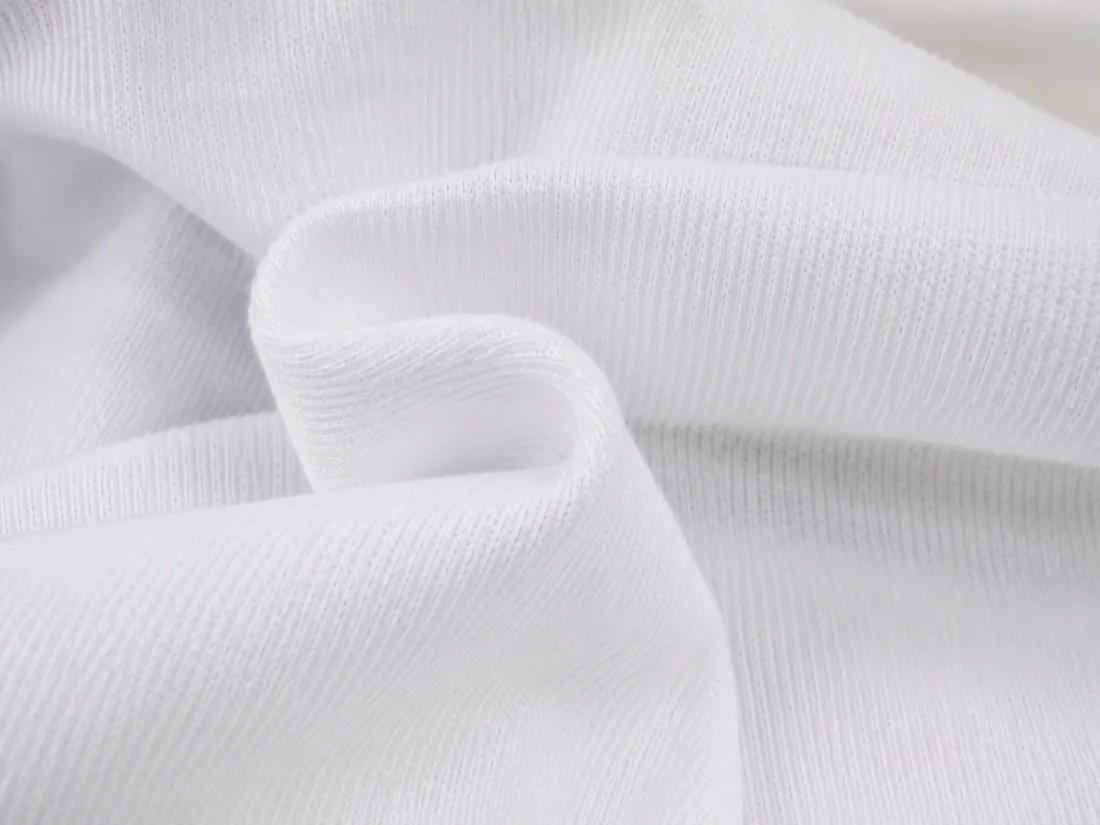
Kaşkorse: a rib-knit variant with a firm, elastic structure, typically used for cuffs, collars, waistbands and other trims.
Terry: a fabric with loops on one side for absorbency and softness; used for bathrobes, hooded towels, ponchos and babywear.
Muslin: a light, breathable open-structure cotton fabric made in single, double or multi-layer form; used for swaddles, muslin covers and blankets.
French terry: a knit with a looped back; our two-thread French terry is used in breathable 1.0 TOG children's pyjamas.
Woven Fabric Types
Woven fabrics are produced separately from our knitted range and are mainly used for bed linen and other home and hotel textiles. They are made from 145 to 400 thread count (TC), in 100% cotton, cotton-polyester and other yarn options agreed per project.
Plain weave: a simple over-under construction that gives a crisp, durable fabric; a standard base for plain-dyed and printed bed linen.
Sateen weave: a construction with longer floats on the face, giving a smooth surface and a soft sheen; often chosen for premium bedding.
Jacquard: patterns woven directly into the fabric, used where the design needs to be part of the structure rather than printed on the surface.
Striped fabrics: stripe designs created in the weave, giving a clean, structured look that is widely used for hotel and home bed linen.
Dyed or printed woven fabrics
Woven fabrics can be supplied plain-dyed or printed. Thread count, weave and finishing are confirmed at the sampling stage.
Fabric Composition Options
Composition is chosen according to the end use, the hand feel you need and your price target. We work with the fibres below, either on their own or in blends; blend ratios are agreed per project and confirmed on the sample and the quotation.
For woven bed linen fabrics, 100% cotton and cotton-polyester are the usual options.
Cotton: breathable and comfortable against the skin; the most familiar base for babywear, sleepwear and bed linen.
Organic cotton: for collections that call for organic fibre; certificate details are shared on request.
Modal: a cellulose fibre with a smooth, soft handle and good drape, often blended with cotton for sleepwear and babywear.
Bamboo: valued for its softness and cool feel; used in baby products, sleepwear and towelling.
Blends: combinations such as cotton-modal, cotton-bamboo or cotton-polyester, used to balance softness, durability and cost.
GSM, Width and Construction Options
GSM, width and construction are agreed with each buyer rather than taken from a fixed list. We confirm these values on the sample and in the quotation, so that bulk production follows the same specification as the approved sample.
GSM (fabric weight)
GSM stands for grams per square metre and describes how heavy a fabric is. It affects warmth, opacity, drape and cost, which is why a summer bodysuit and a winter sleeping bag call for very different weights.
Width
Width is the usable width of the fabric roll. It matters for cutting efficiency and for products such as bed linen, where panel sizes need to fit the fabric width with minimal waste.
Construction
Construction covers the knit or weave structure, the yarn type and count, and the density. For knitted fabrics it means the structure, such as single jersey or rib; for woven fabrics it includes the weave and the thread count. Together these determine handle, stretch, durability and appearance.
Plain-Dyed and Custom Colour Fabrics
Plain-dyed fabrics are dyed to the colour you specify, from core neutrals to seasonal shades. You can send a physical swatch or a code from a standard colour system, and the colour is submitted for your approval on a sample before bulk dyeing.
During production, colour consistency is checked against the approved standard. Per-colour minimums depend on the fabric and the dyeing method and are confirmed with each quotation.
Reactive, Pigment and Digital Printing
We print knitted and woven fabrics using three methods. The right choice depends on the fibre, the design, the number of colours, the hand feel you want and the order quantity, and we advise on this during sampling.
Reactive printing
Reactive dyes form a chemical bond with cellulose fibres such as cotton, modal and bamboo. The result is a soft hand, good wash fastness and colour that becomes part of the fibre, which is why reactive printing is widely used for babywear, sleepwear and bed linen.
Pigment printing
Pigment printing fixes colour onto the fabric surface with a binder. It works on a wide range of fibres and blends and is often used for graphic designs and simpler motifs; depending on coverage, the printed area can feel slightly firmer than the base fabric.
Digital printing
Digital printing applies ink directly from a digital file, without screens. It handles fine detail, gradients and many colours, making it a practical choice for complex artwork and designs that change frequently.
Fabric Finishing Options
Finishing determines how a fabric feels and behaves when it reaches your production line and, later, the end user. Requirements such as hand feel, softness, shrinkage behaviour and surface appearance are discussed at the brief stage and agreed per project.
The agreed finishing is applied to the sample first, so you can assess handle and appearance before bulk production. Any performance targets you work to, such as dimensional stability after washing, are recorded in the specification and confirmed with the quotation.
MOQ and Colour Minimums
We offer flexible MOQ options depending on product and material. For fabric, minimums are set in kilograms, both as a total order quantity and as a minimum per colour.
The exact figures depend on the fabric type, the construction, whether the fabric is plain-dyed or printed, and the printing method. Total and per-colour minimums are confirmed with each quotation, so please include your expected quantities and colour breakdown when you enquire.
Laboratory Testing and Quality Control
Our production follows OEKO-TEX® standards, and certificate details are shared on request. Where your market or brand requires additional laboratory tests, these can be arranged according to your requirements and agreed before production.
During and after production, fabrics are checked against the approved sample and specification so that deviations are identified before packing. Checks cover:
GSM: fabric weight against the specification
Width: usable fabric width
Colour: against the approved standard
Appearance: surface quality and visible defects
Roll Packaging and Export
Finished fabrics are packed in rolls and protected for transport. Each roll is labelled with the details agreed with the buyer, such as article, composition, colour, lot and weight, so the fabric can be identified and traced on arrival.
With more than 10 years of textile export experience, we plan packing and shipment details with each buyer. Delivery can be arranged on common Incoterms such as EXW, FOB or DAP; the right option is agreed for each order.
Frequently Asked Questions
We manufacture knitted and woven fabrics. Our knitted fabrics include single jersey, interlock, rib, kaşkorse and French terry, and we also produce terry and muslin. On the woven side, we produce plain weave, sateen, jacquard and striped bed linen fabrics in 145–400 TC, and all fabrics can be supplied plain-dyed or printed.
Yes. Through Custom Fabric Development, we agree the composition, construction, GSM, width and colour or print with you based on your brief. The project then follows our standard steps: sourcing, sampling, approval, production, quality control, packaging and export. The approved sample becomes the reference for bulk production and final checks.
Yes. Our Wholesale Roll Fabric Supply serves garment and home-textile manufacturers, wholesalers and fabric buyers. Fabrics are produced to the agreed specification, labelled roll by roll and packed for shipment. Quantities, colours and delivery terms are confirmed with each quotation.
We offer flexible MOQ options depending on product and material. Minimums are set in kilograms, as a total quantity and per colour, and vary with the fabric type and whether it is dyed or printed. The exact figures are confirmed with each quotation.
Yes. Send us a physical swatch or a colour code, and we will prepare a sample in that colour for your approval before bulk dyeing. During production, colour is checked against the approved standard.
It depends on the fibre, the design and the hand feel you want. Reactive printing is generally preferred for cotton and other cellulose fibres where softness and wash fastness matter, pigment printing suits a wide range of fibres and simpler designs, and digital printing is best suited to detailed, multi-colour artwork. We recommend the most suitable method when we review your design.
Yes, sample support is part of our process. We can provide swatches or produce a sample to your specification, so you can assess handle, weight and colour before placing an order. Sampling details and timing are confirmed when we receive your enquiry.
Our fabric production follows OEKO-TEX® standards, and certificate details are shared on request. If your market requires further testing, tests can be arranged according to your requirements and agreed before production.
Lead time depends on the fabric type, the quantity, the number of colours and whether the fabric is dyed or printed. We confirm the production schedule with each quotation and again once the sample has been approved.
Yes. We have more than 10 years of experience in textile exports from Denizli, Turkey. Delivery can be arranged on common Incoterms such as EXW, FOB or DAP; the right option is agreed for each order.
We work on competitive, project-based pricing. The price depends on composition, construction, GSM, width, dyeing or printing method, finishing requirements and order quantity. Sharing these details, or a reference sample, helps us prepare an accurate quotation.
Yes. Alongside fabric production, we convert our fabrics into ready-to-sell finished products on a project basis, including baby and children's textiles, hotel textiles and home textiles. This is a practical option for buyers who want fabric and finished goods from the same supplier.
Tell us the fabric type, composition, GSM, width, colour or print and estimated quantity you need, and we will come back to you with sample options and a project-based quotation. You can also reach us on WhatsApp at +90 546 883 52 19 or by email at marketing@drutekstil.com.